
The Problem Isn’t Your Clients
If your clients keep asking:
- “Where are we at?”
- “What’s been done?”
- “What’s coming next?”
It’s easy to assume they’re being difficult.
They’re not.
They’re asking because they can’t see what’s going on.
What This Looked Like in Practice
We were doing what most businesses do.
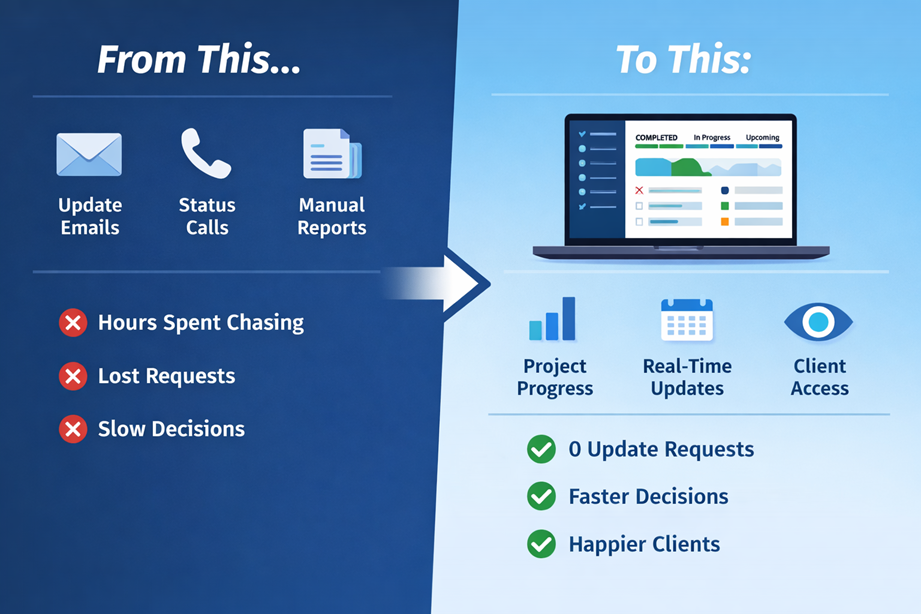
- Weekly update emails to management
- Manual milestone updates to stakeholders
- Ongoing back-and-forth via email
On paper, that sounds reasonable.
In reality, it created friction:
- A couple of hours every week just responding to updates
- Slow-moving admin tasks due to lack of clear reporting
- Difficulty tracking who needed to be included in conversations
- Requests and decisions getting buried in email threads
The Mistake Most Businesses Make
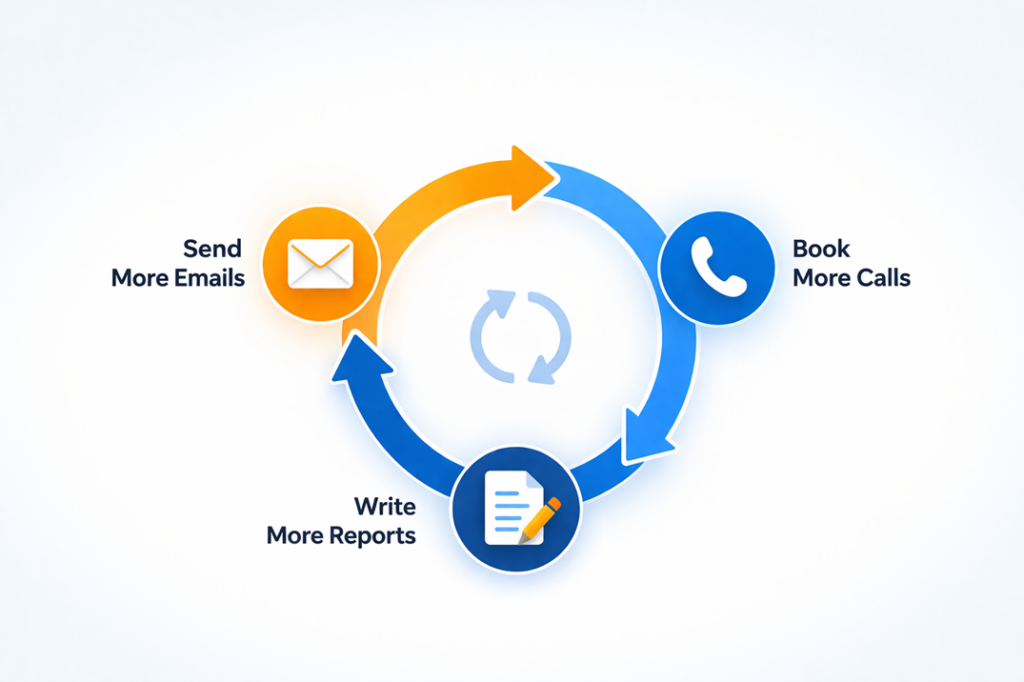
When clients ask for more visibility, most businesses respond by:
- Sending more emails
- Booking more calls
- Writing more reports
It feels productive.
But it’s not.
You’re not solving the problem—you’re scaling the admin.
Because no matter how many updates you send…
The client still has to:
- Read it
- Interpret it
- Ask follow-up questions
And the cycle repeats.
The Turning Point
The realisation was simple:
We already had the data.
We just didn’t have a way to show it properly.
Our project management system contained everything:
- Activity
- Progress
- Completed work
- Ongoing tasks
But we were manually extracting it and turning it into emails.
We weren’t lacking communication.
We were lacking visibility.
What We Changed
Instead of improving how we communicated…
We changed the system.
We introduced client-accessible reporting.
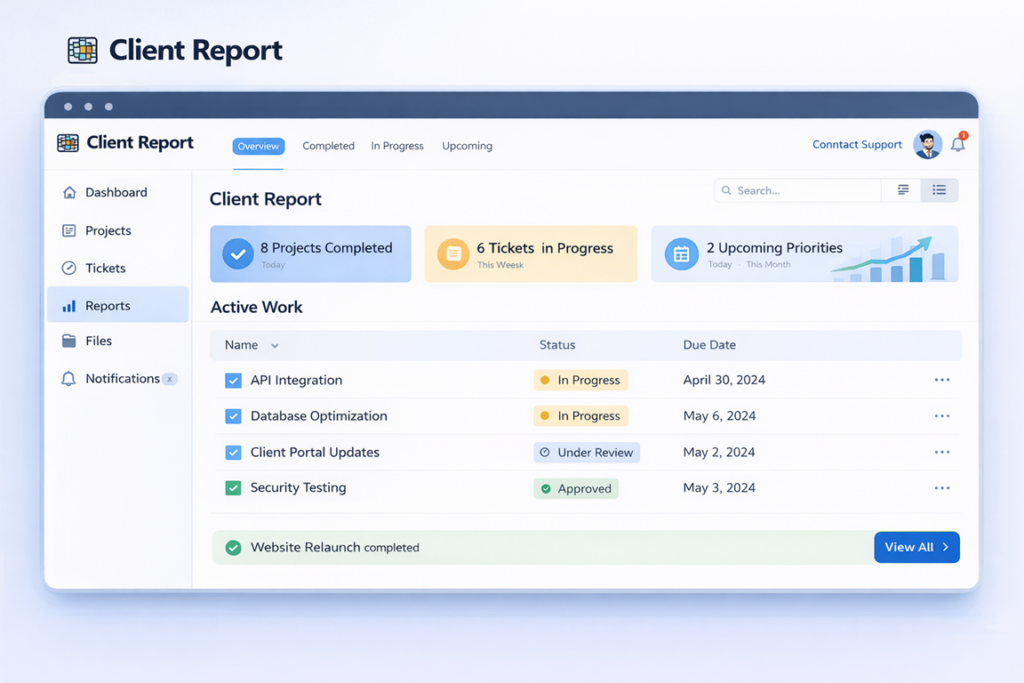
Now, clients receive a secure link to a report that shows:
- Completed projects
- Closed tickets
- Active projects
- Active tickets
All within a defined time period.
Accessible via:
- Their portal
- Or a secure, shareable URL
Automatically generated. No manual effort.
What This Looks Like for the Client
Instead of asking for updates, they can now:
📊 See what’s been delivered
📅 Understand when it happened
📌 Track what’s currently in progress
No emails required.
No chasing.
No ambiguity.
The Result
The impact was immediate.
- Update requests dropped to zero
- Email volume reduced significantly
- Meetings became shorter and more focused
- Decision-making improved
Client feedback was simple:
“It’s great being able to see what’s happening.”
And internally?
- Less admin
- More time for high-value work
- Better alignment between us and the client
The Bigger Shift
This wasn’t just about reporting.
It changed how we work.
- Clients now prioritise work more effectively
- Higher-value projects move faster
- Conversations are about decisions—not updates
When everyone can see the same information, everything speeds up.
What Most Businesses Still Get Wrong
They think the solution is better communication.
It’s not.
The real problem is this:
You’re forcing clients to rely on you for information they should already have.
That creates:
- Bottlenecks
- Delays
- Unnecessary dependency
And ultimately…
A worse client experience.
The Hidden Cost
If you don’t fix this, you pay for it in ways that aren’t always obvious:
- Time lost every week on admin
- Slower project delivery
- Frustrated clients
- Poor prioritisation
And most importantly—
You become the middleman for information instead of the driver of progress.
The Shift Managing Directors Need to Make
If you’re still relying on updates, ask yourself:
Why does my client need to ask me at all?
Because in a well-structured system…
They wouldn’t.
Why This Matters (And Why Most Tools Don’t Solve It)
Off-the-shelf tools weren’t designed around your business.
They:
- Fragment your data
- Limit how information is presented
- Make it hard to give clients clean, relevant visibility
That’s why most businesses fall back to email.
Where This Fits In Our Model
This is exactly why we build bespoke operational portals.
Because when your system is built around your business:
- Visibility becomes natural
- Reporting becomes automatic
- Clients stay informed without effort
And most importantly—
You don’t need to rebuild or replace anything as you grow.
Final Thought
If your clients keep asking for updates…
It’s not a communication problem.
It’s a system problem.