

How we replaced four scattered, manually-answered management questions with reports built on one shared foundation, instead of four separate one-off fixes.
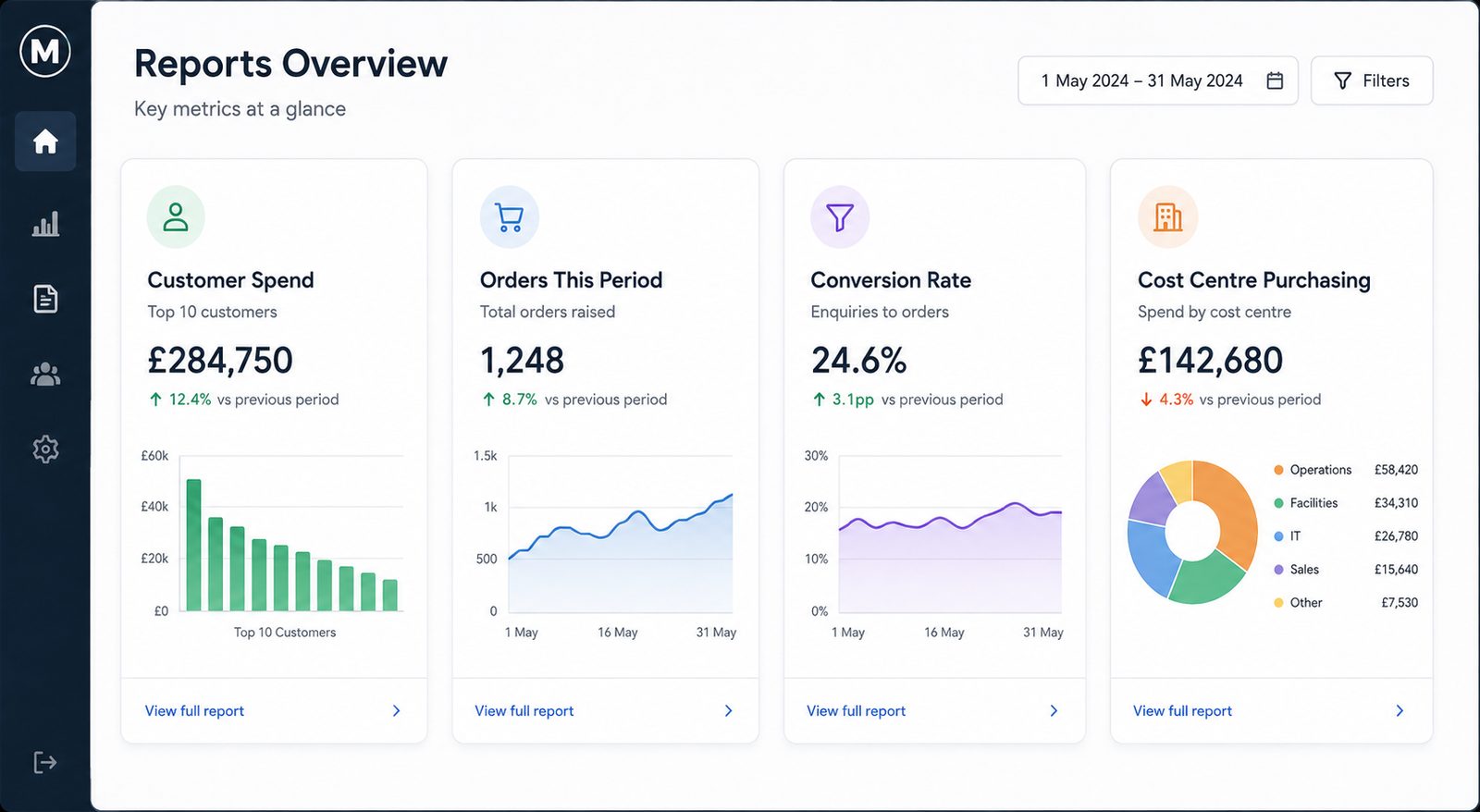
Every operations team has a handful of questions that come up often enough to matter, but not often enough to have a proper answer sitting ready:
- Who are our top customers by spend?
- What share of enquiries actually turn into orders?
- What got raised this period?
- How does purchasing spend break down by cost centre?
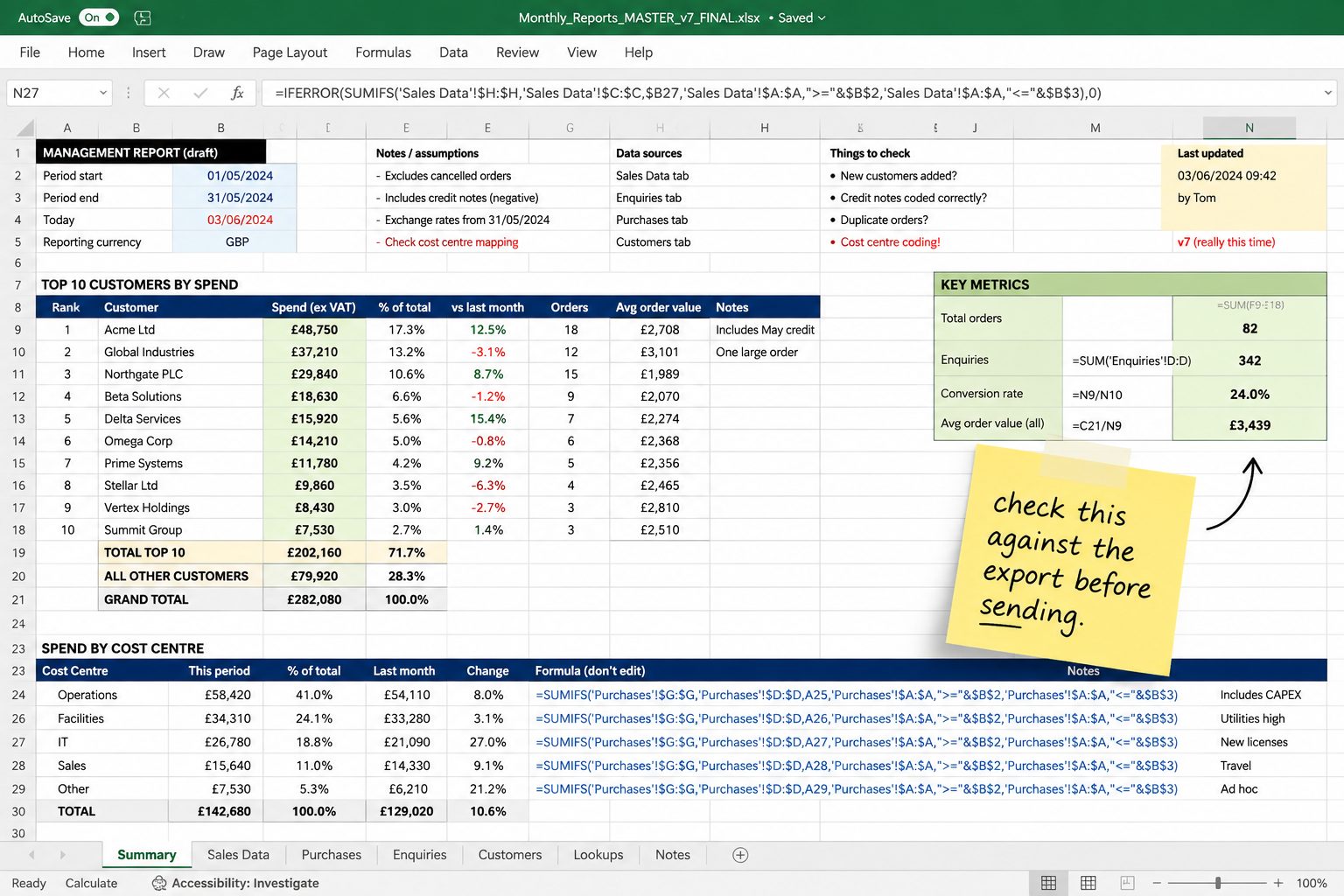
On one system we work on, none of these had a dedicated, reliable report. Answering them meant someone manually assembling the numbers, or working from a report that had quietly aged out of being trustworthy.
Setting the stage
None of these questions are exotic. They’re the kind of thing a sales lead or finance manager asks in a Monday meeting and expects an answer to by Tuesday. The trouble is that “expects an answer by Tuesday” and “someone has to manually pull it together by Tuesday” look identical from the outside, right up until the person who knows how to pull it together is on holiday, or the spreadsheet formula quietly breaks, or the report nobody’s touched in a year turns out to be counting the wrong thing.
The easy version of this fix would have been wrong
The tempting shortcut is to build four one-off reports and move on. We didn’t do that, because four one-off reports usually means four separate, slightly-different pieces of fragile code, each one its own small maintenance liability, each one built and tested completely from scratch, each one likely to drift from the others in small, annoying ways (different date filters, different formatting, different edge-case handling).
So instead of four fixes, we built one foundation.
What we built
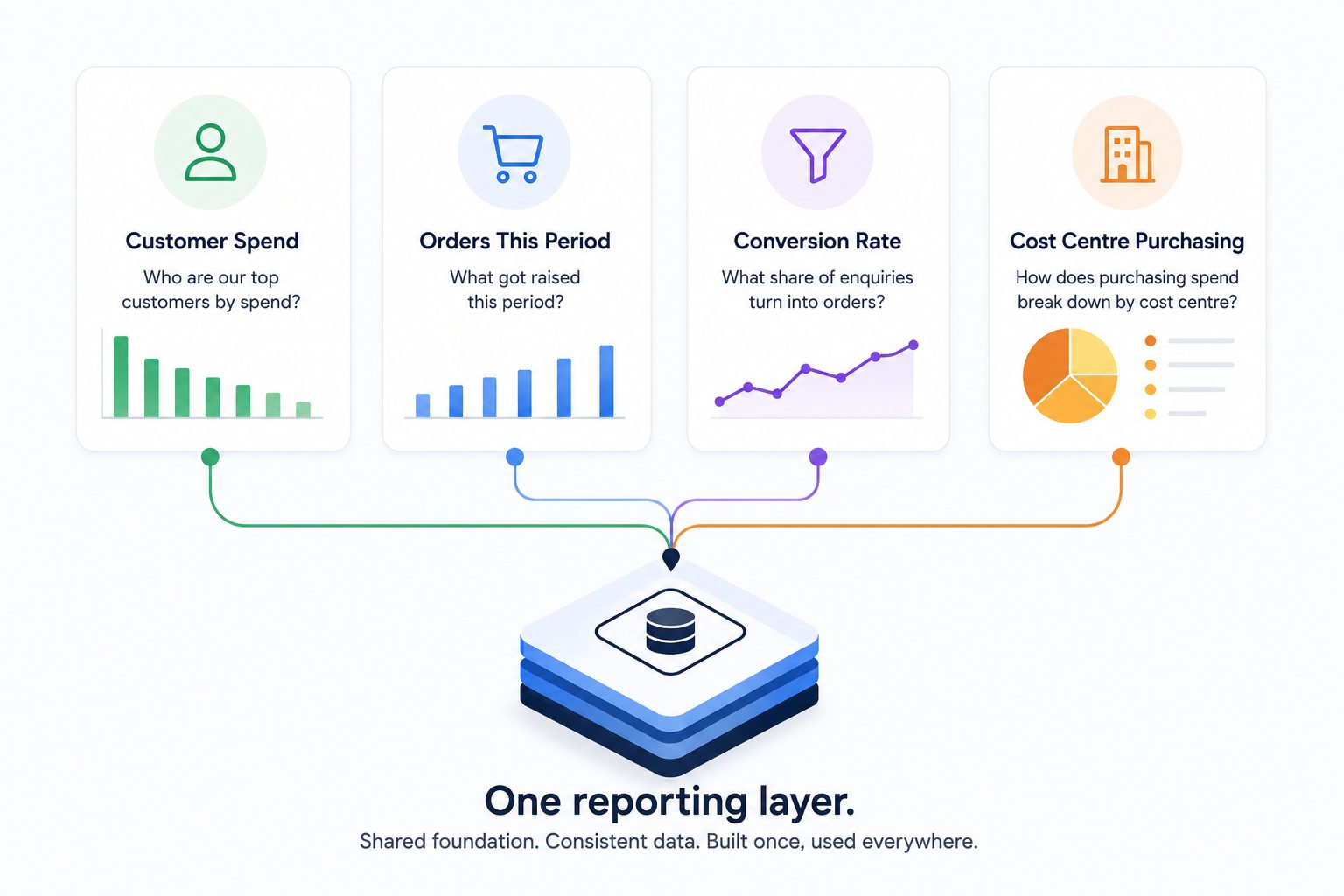
We built a shared, reusable reporting foundation once, and put all four reports on top of it:
- Customer spend. Who’s spending the most, over whatever period you’re looking at.
- Orders raised in a period. A straight, trustworthy count instead of a stale export.
- Enquiry-to-order conversion. What share of enquiries are actually converting.
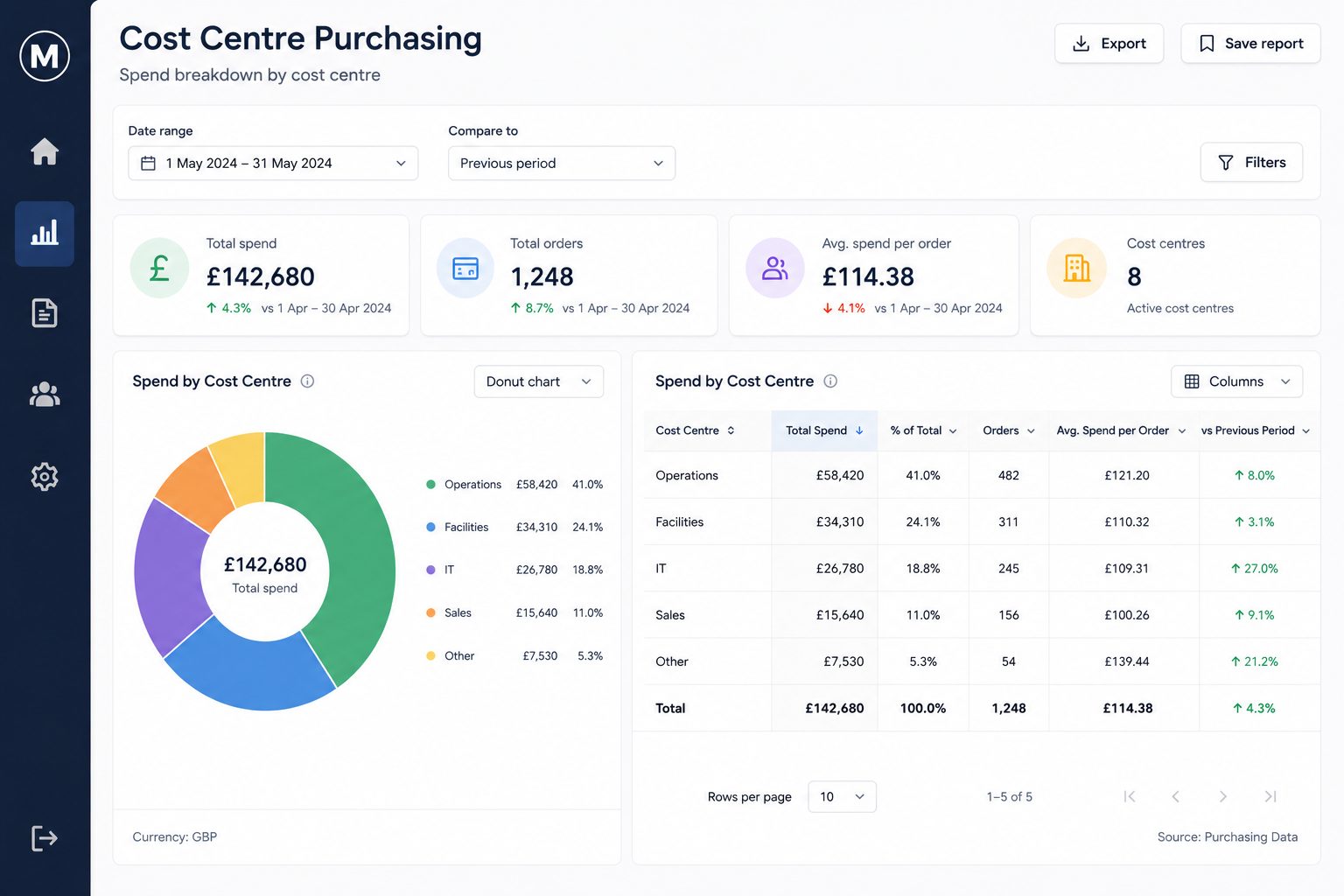
- Cost-centre purchasing. Spend broken down the way finance actually needs to see it.
Same review process, same testing, released together. But critically, the next report this business needs won’t start from zero. It slots into a pattern that already exists, instead of becoming its own bespoke build.
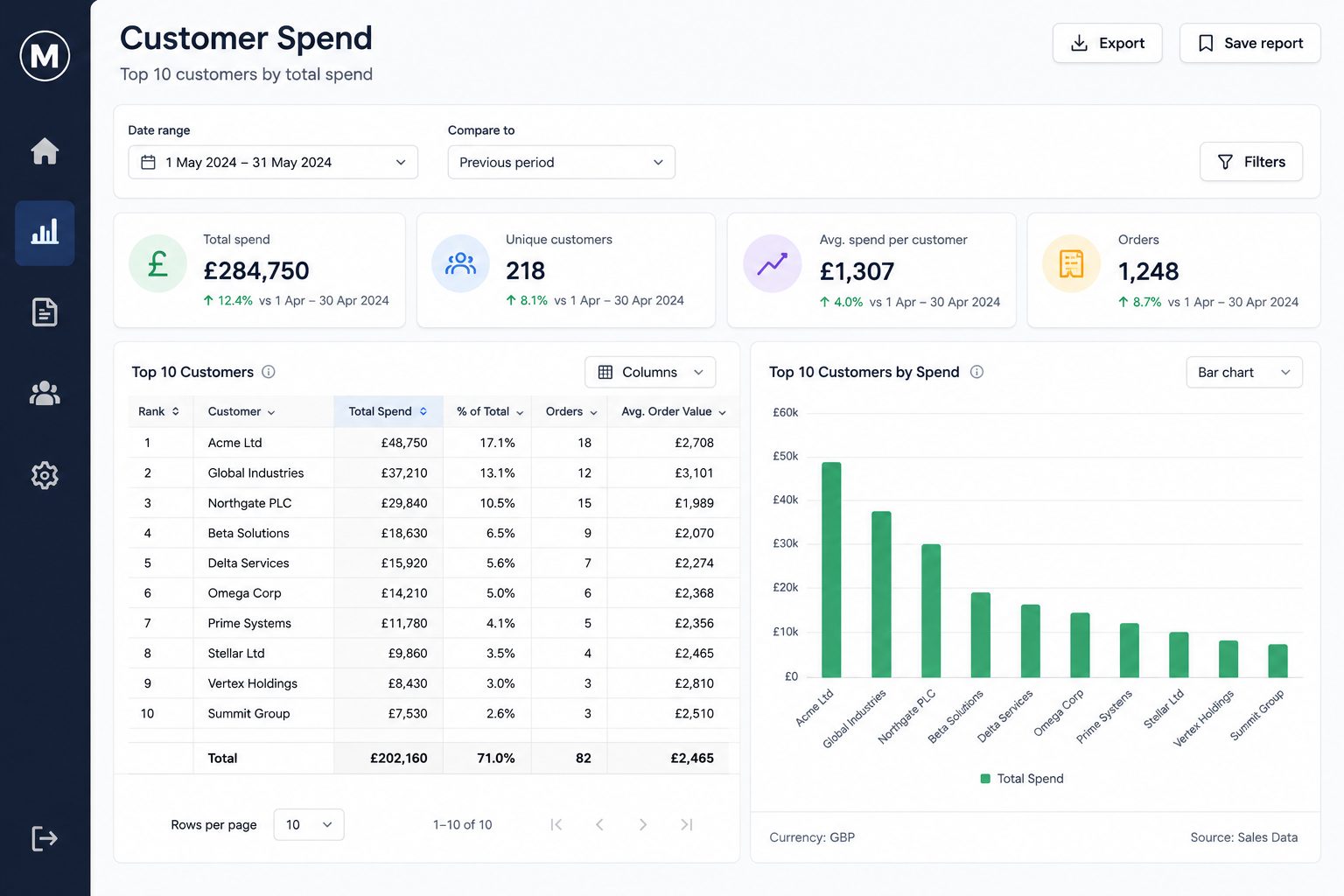
All four went through proper review and user acceptance testing before release, alongside the platform’s full automated test suite. Nothing shipped that hadn’t been checked by the people who’d actually use it.
Where this leaves things
We can’t tell you yet how much time this is saving day to day. That’s the kind of thing you only see clearly a few months in, once a team has stopped thinking of it as “the new reports” and started just relying on them without a second thought. What we can say is that the four questions above no longer have a person standing between them and an answer.
Final thoughts
If your team’s answer to “can someone pull those numbers” is currently a person, a spreadsheet, and a Tuesday afternoon, this is the shape of the fix worth reaching for: not four quick reports, but one reporting layer that four reports happen to live on, with room for a fifth, sixth, and seventh to slot in later without starting over.